
What is Therapy for Punks?
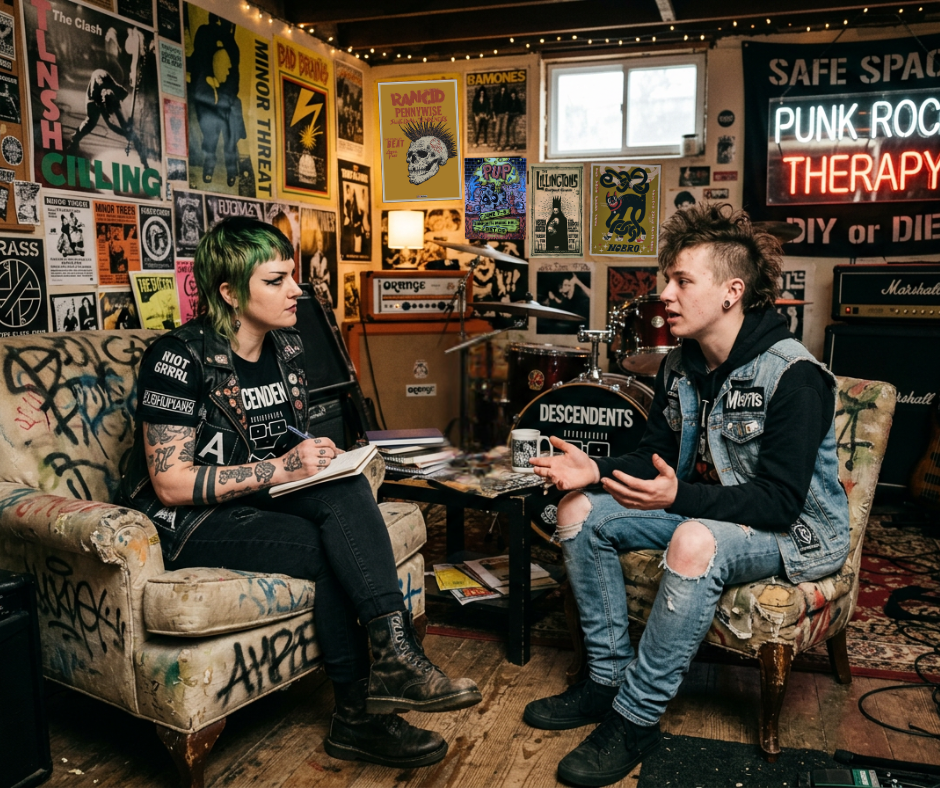
This is therapy for people who were never meant to toe the line, comply, or quietly cope. Therapy for Punks is not about changing who you are. It is about understanding your experiences, healing what hurts, and building a life that actually feels like yours.
For punks, hardcore kids, 2SLGBTQ+ folks, artists, outsiders, and anyone who learned to survive by questioning authority and refusing to compromise your identity. If you’ve been told you’re “too much,” “difficult,” or “self-destructive” when really your nervous system learned to survive without reliable external safety or permission and your emotions do not stay neatly regulated in ways that make others comfortable — you’re in the right place.
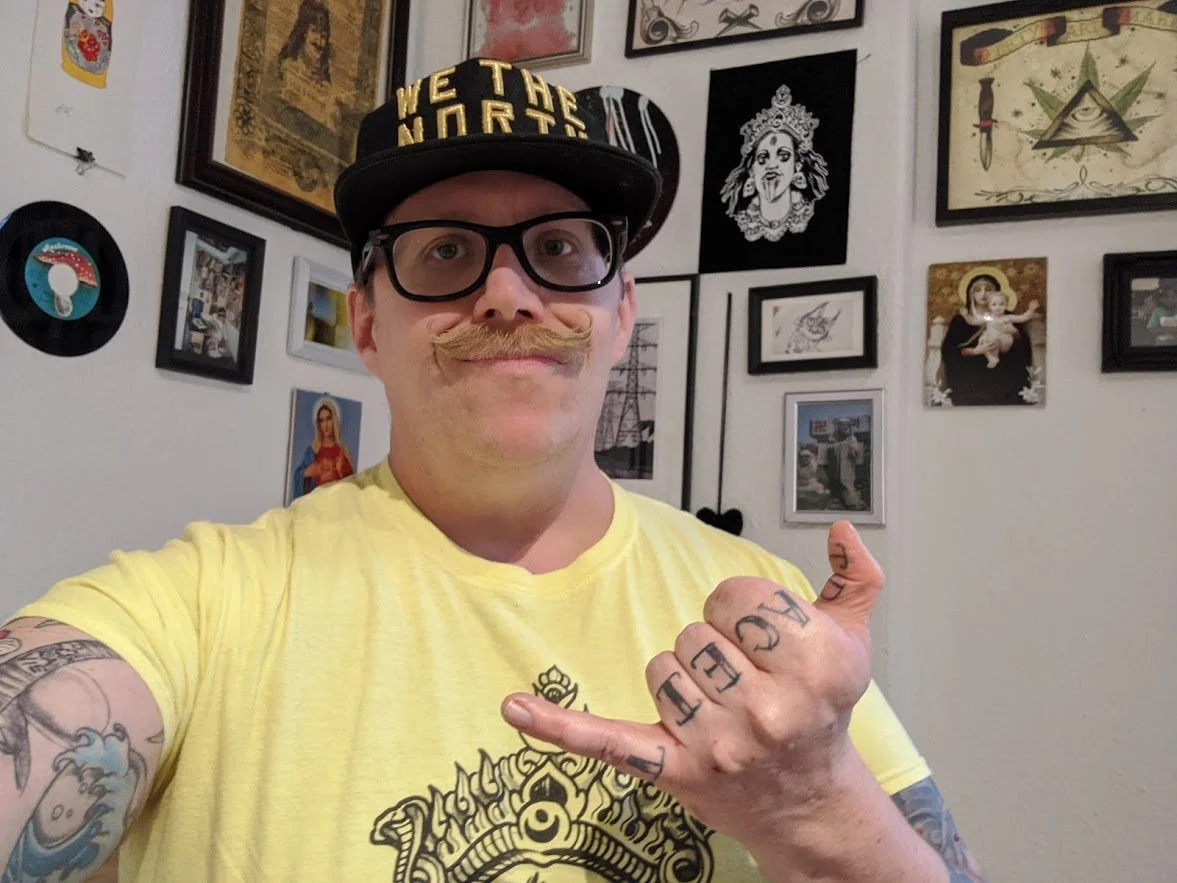
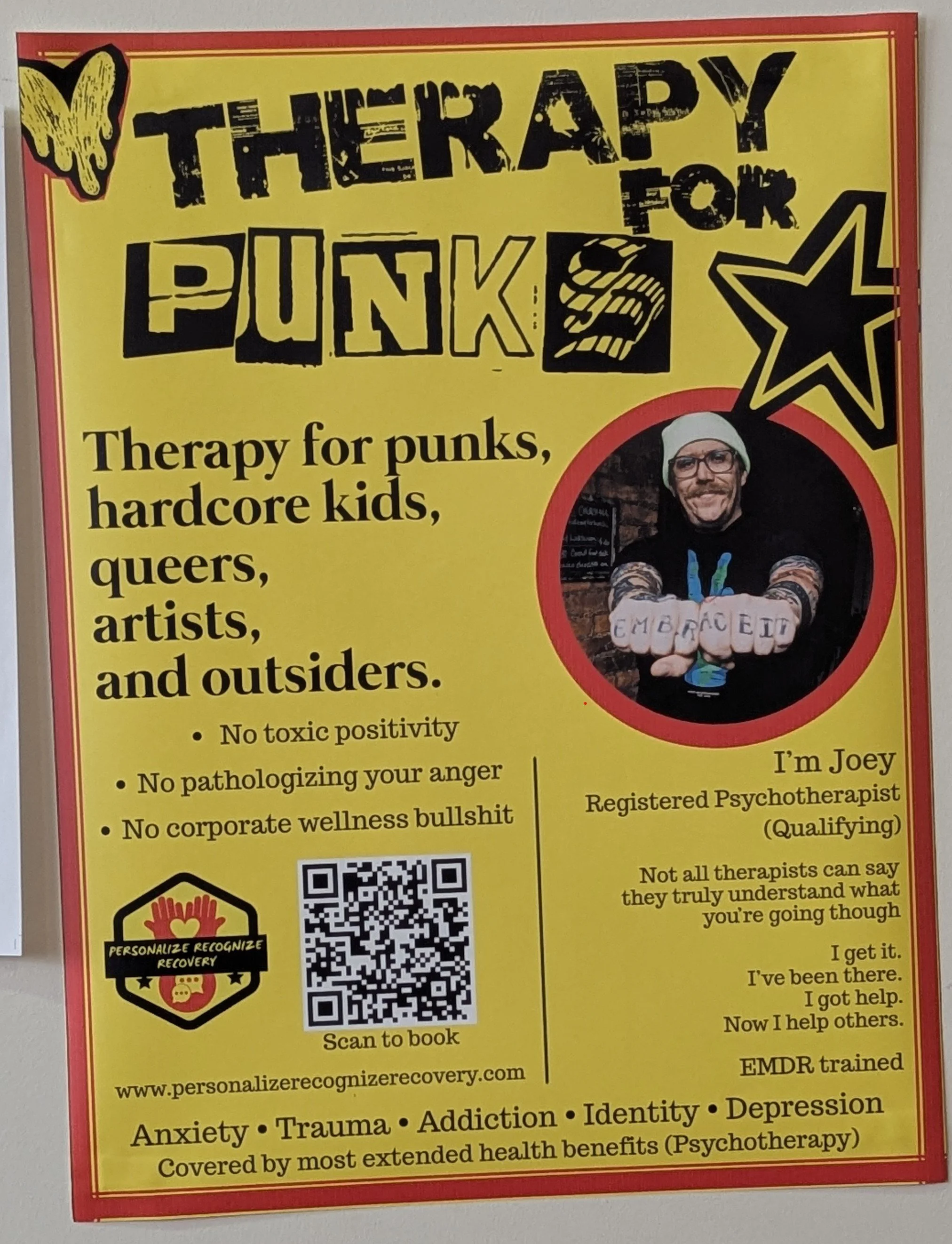
I’m Joey — a Registered Psychotherapist (Qualifying) who understands the punk, outsider, and alternative communities, offering real, evidence-based trauma-informed psychotherapy without the corporate wellness language that often leaves people feeling unseen. You can have real talk with me. No toxic positivity. No obedience training. No pathologizing your anger, grief, or refusal to accept a broken system as normal.
We work with anxiety, trauma, substance use, identity, burnout, mood, and the cost of living loud in a world that punishes difference — at your pace, on your terms, with your consent at the centre.
You are not a problem to be solved. You deserve space to understand your story, your survival strategies, and what comes next.


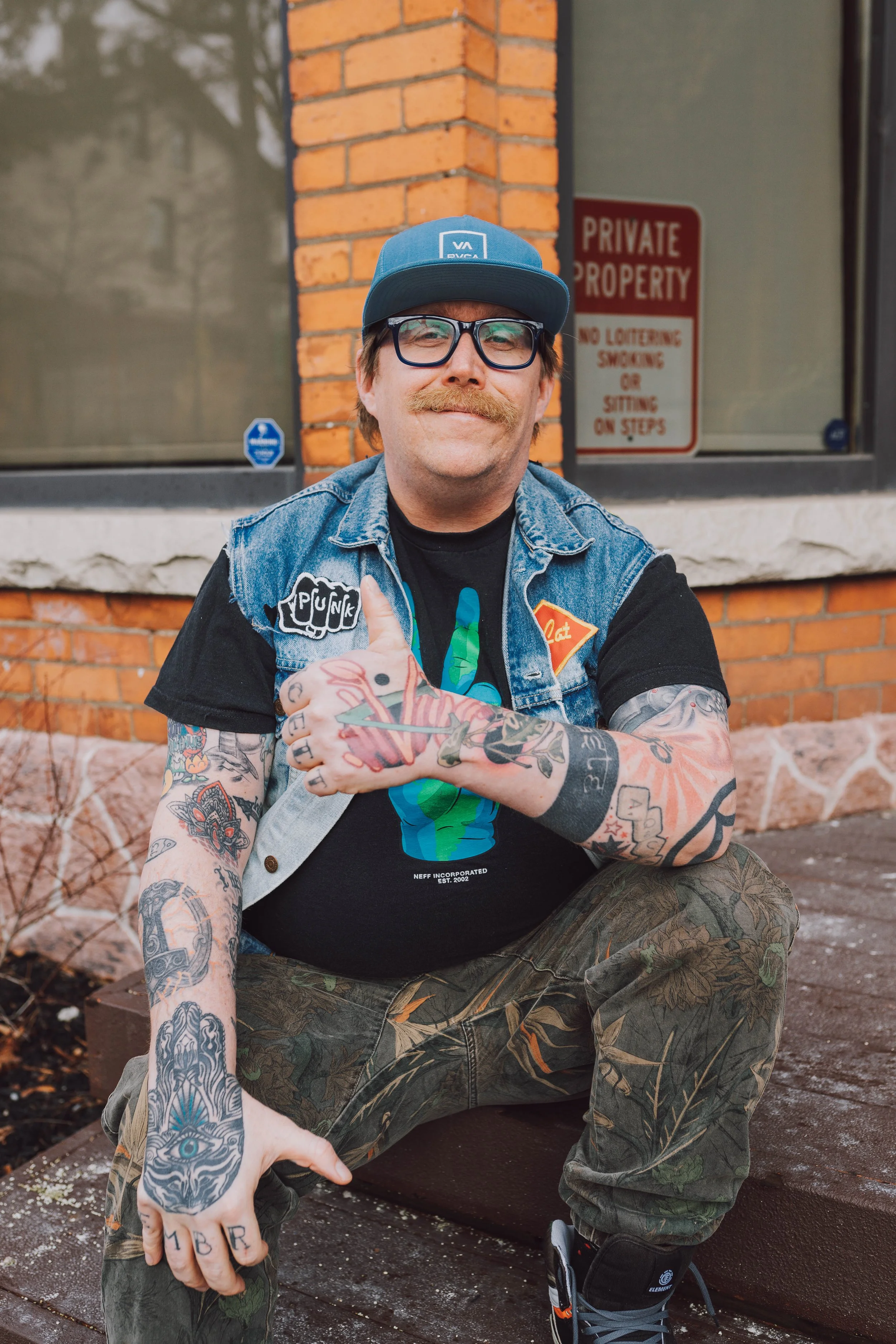
A Punk Therapist?
I’m Joey, my work is for people who don’t quite fit the mould. The ones who have felt misunderstood, dismissed, or disconnected—from others, and sometimes from themselves. The outsiders, the misfits, the artists, the ones who’ve never quite bought into the system—and the ones the system hasn’t worked for.
I work with adults and young adults who feel stuck in cycles of addiction, emotional chaos, shame, identity confusion, and self-sabotage—and who haven’t found themselves reflected in traditional therapy spaces.
My style is direct, real, and grounded in lived experience—not just theory. I’ve been sober since 2013 after years of addiction and navigating mental health conditions. I know what it’s like to sit in the client chair and feel like the person across from you doesn’t fully get it. When I say “I understand,” I mean it.
After rebuilding my own life, I returned to school at 38 and completed my Master’s degree in Counselling Psychology in 2026. I’ve worked in both inpatient and outpatient settings, facilitating individual and group therapy, and I bring that depth of experience into every session.
I offer a space that is judgement-free, non-conformist, and built around you. There’s no one-size-fits-all approach here. You don’t have to perform or censor yourself. We deal with what’s real. Together, we figure out what actually works for you—not what you’ve been told should work. My approach is client-centred and flexible, drawing from CBT, DBT, ACT, Solution-Focused, Humanistic therapy, and EMDR for trauma—always tailored to the person in front of me. Together we will personalize a treatment plan for you in very much a DIY collaboration.
What Therapy for Punks Can Help With
🖤 Trauma & Survival
Healing from painful experiences, childhood wounds, difficult family dynamics, complex trauma, and feeling stuck in survival mode. Processing experiences that still feel present.
⚡ Anxiety & Emotional Overwhelm
Understanding intense emotions, anxiety, overthinking, and panic. We can address feeling disconnected, self-criticisms, harsh inner dialogue, and burnout and exhaustion from constantly pushing through.
🔥 Addiction & Recovery
Exploring substance use, recovery, self-destructive patterns, shame, rebuilding a meaningful life and identity after addiction.
🎸 Identity & Self-Worth
Finding yourself beyond labels, expectations, and the feeling that you never quite fit in. We can create a life that feels authentic rather than expected
🧠 Depression, Burnout & Feeling Stuck
Working through hopelessness, exhaustion, disconnection, people-pleasing, difficulty trusting others, and navigating conflict and communication.
🤝 Relationships & Boundaries
Building healthier relationships, improving communication, learning how to have relationships without losing yourself. and learning to protect your energy without losing connection.
🌱 Life Transitions & Growth
Navigating change, finding purpose after surviving hard experiences, moving forward without abandoning who you are and creating a life that feels authentic.
Influential Punk Songs on Mental Health and Recovery
Music, lyrics, and artists mentioned are used to support clinical and educational discussions about recovery, identity, and mental health.
I don’t own any of this material—everything belongs to the original artists and copyright holders. No affiliation is implied.
My views may/may not align with artist’s intention.

“Clear the Air” by Off with Their Heads feels like that moment when you can’t keep holding it in anymore. Things have been building for a while—tension, frustration, maybe even hurt—and there’s this point where it all just needs to come out, even if it’s messy. It’s the kind of space where you might be realizing that staying quiet or avoiding it isn’t helping anymore, but actually saying what’s real can feel scary or overwhelming too. And sometimes you’re not even sure how to “clear the air” without things getting worse, or how to start that conversation in a way that feels safe.
“A Little Hope” by Pennywise is that small but steady part of you that still believes change is possible, even if things haven’t shifted yet. It’s not loud or overconfident—it’s more like a quiet persistence that shows up when everything feels stuck and says, “this doesn’t have to stay this way.” Even if you don’t know exactly how recovery happens, or what the next step is, this kind of hope is often where it starts: not with certainty, but with the sense that things can get better, and that you don’t have to figure it all out alone to begin moving in that direction.
“Comeback Kid” by Descendents is that moment where something in you starts waking back up after feeling flat, stuck, or off course for a while. It’s not polished or perfect—it’s momentum returning. A reminder that you’re not done, not defined by where you’ve been, and not locked into the version of you that was struggling. Even if things are still messy, there’s movement again. Energy. A shift from surviving to starting to engage with life differently, even in small ways.
“Waiting Room” by Fugazi is that feeling of knowing something in your life isn’t working, maybe even knowing exactly what needs to change, but still not moving. It’s that in-between space where you’re aware, maybe even frustrated with yourself, but somehow still stuck in place. Like you’re sitting with it all, feeling the pressure build, but nothing is shifting yet. It not be about unwillingness; it can be that you don’t know how to start, or where to go for help, or what “change” would actually look like in a real, doable way.
“I Was Wrong” by Social Distortion is that moment where things start to come into focus a bit more clearly, and you can see your part in what happened without everything turning into self-attack. It’s less about blame and more about honesty—just that quiet recognition that something didn’t land the way you wanted it to, or things went off course. Sometimes that kind of awareness shows up before you even know what to do with it, or how to make things right, or whether it’s even possible to repair.

“I Beg to Differ (This Will Get Better)” by Billy Talent is that push inside you that refuses to accept that things will always stay the way they are. It’s hope, but not in a soft or passive way—it’s more defiant than that, like something in you arguing back against the idea that you’re stuck or beyond change. Even when it doesn’t feel fully believable yet, there’s still a part of you pushing forward, saying things can shift, even if it takes time and effort and a lot of uncertainty.
“Get Better” by Frank Turner is that moment where something in you stops just surviving and starts choosing movement again. It’s not naive optimism—it’s steady, grounded insistence that change is still possible, even if things are messy, delayed, or uncertain. There’s a kind of quiet defiance in it too, like refusing to accept that where you are right now is the final version of things. Even when you don’t fully believe it yet, the message is simple: getting better is still on the table, and it doesn’t require perfection to start.
What’s your favourite punk rock recovery song?
Punk has always been about honesty, struggle, and fighting your way forward.
Are there any punk rock songs that have supported you through sobriety, mental health challenges, or personal change?
Send a message and feel free to share what the song means to you—what it’s helped you carry, face, or move through.
Selected songs may be featured in a community recovery playlist.
Frequently Asked Questions
-
Therapy for Punks is therapy for people who have always felt like outsiders. While it's inspired by punk and DIY culture it's for anyone looking for an authentic, non-judgemental space to explore challenges such as trauma, anxiety, depression, addiction, self-esteem, or relationship concerns.
-
Therapy for Punks is for anyone who has felt like they don't fit in—not just people who identify as punks if you've always felt like an outsider, this is a space where you can be yourself.
-
No. You do not have to identify as a punk to work with me. Therapy for Punks is about creating a space for people who have felt different, misunderstood, or like they don't fit traditional expectations. The focus is on your experiences, goals, and what you want to work through in therapy.
-
If you don't trust therapists, that is okay. Many people come to therapy with past experiences of feeling judged, misunderstood, or not heard. Building trust takes time, and therapy should be a collaborative process where you feel respected and in control. My goal is to create a space where you can be honest, ask questions, and decide what feels right for you.
-
Therapy for Punks can help with a variety of mental health concerns, including trauma, anxiety, depression, addiction, grief, self-esteem, relationship challenges, stress, and major life transitions. Therapy can also support personal growth, self-understanding, and building healthier ways of coping.
-
No. You do not need a mental health diagnosis to start therapy. Therapy is available whether you have a formal diagnosis or simply feel that something in your life is not where you want it to be.
-
Yes. I offer in-person psychotherapy in both Hamilton and Toronto, as well as virtual therapy for clients throughout Ontario.
-
Yes. Therapy for Punks is 2SLGBTQIA+ affirming. We strive to create a space where people of all identities, backgrounds, and experiences feel respected and supported. We welcome all people who have felt marginalized, misunderstood, or like they do not fit traditional expectations.
Want to Work Together?